






Baldwin (Replica)
Vierspezies-Sprossenradmaschine
1875
Baldwin (Replica)
Four-species stepped drum machine
1875
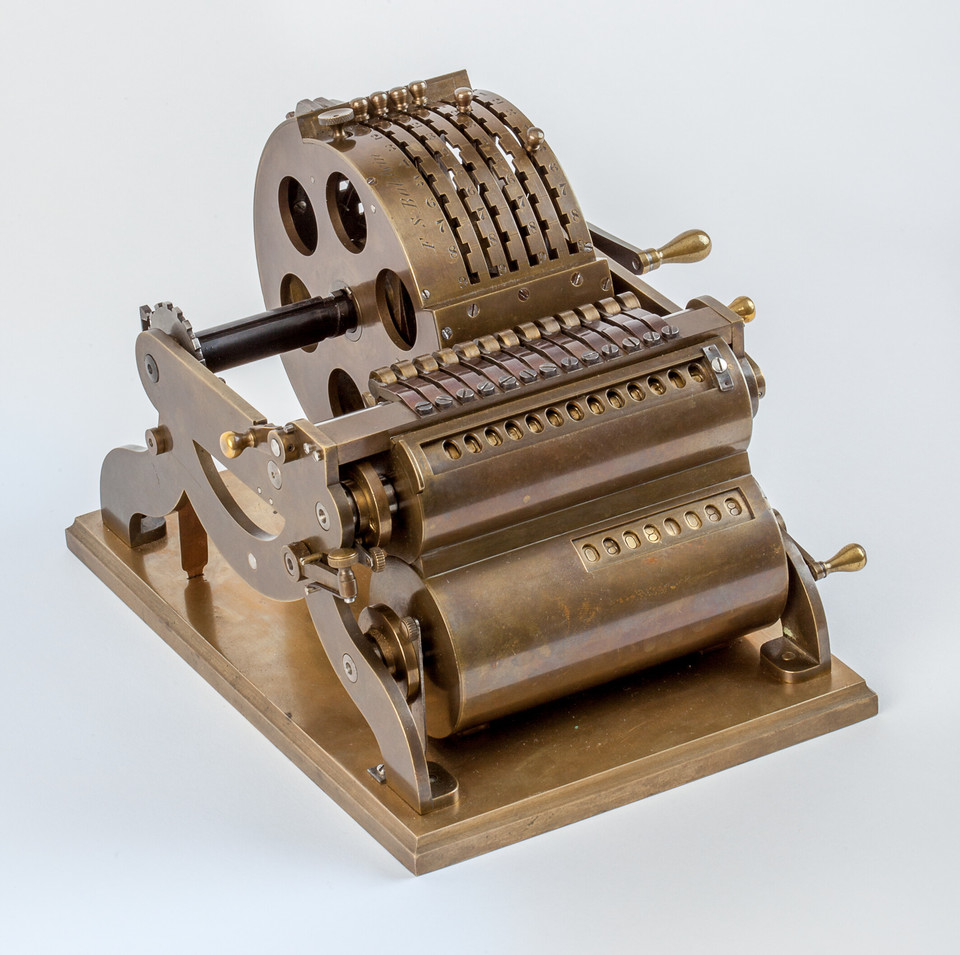
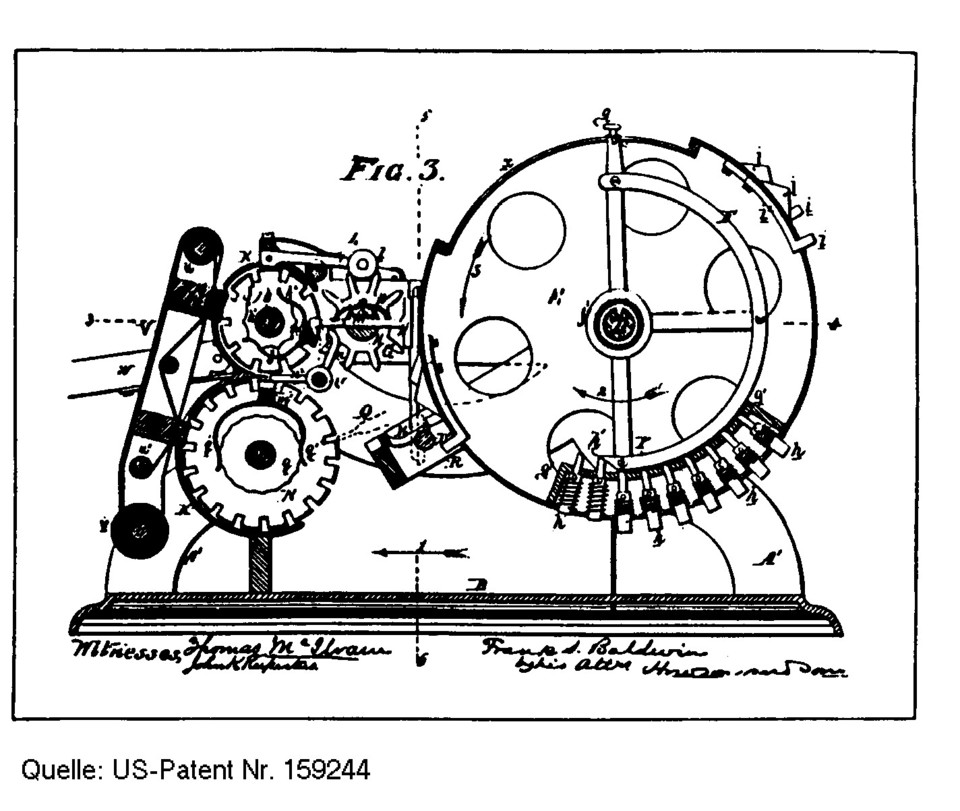
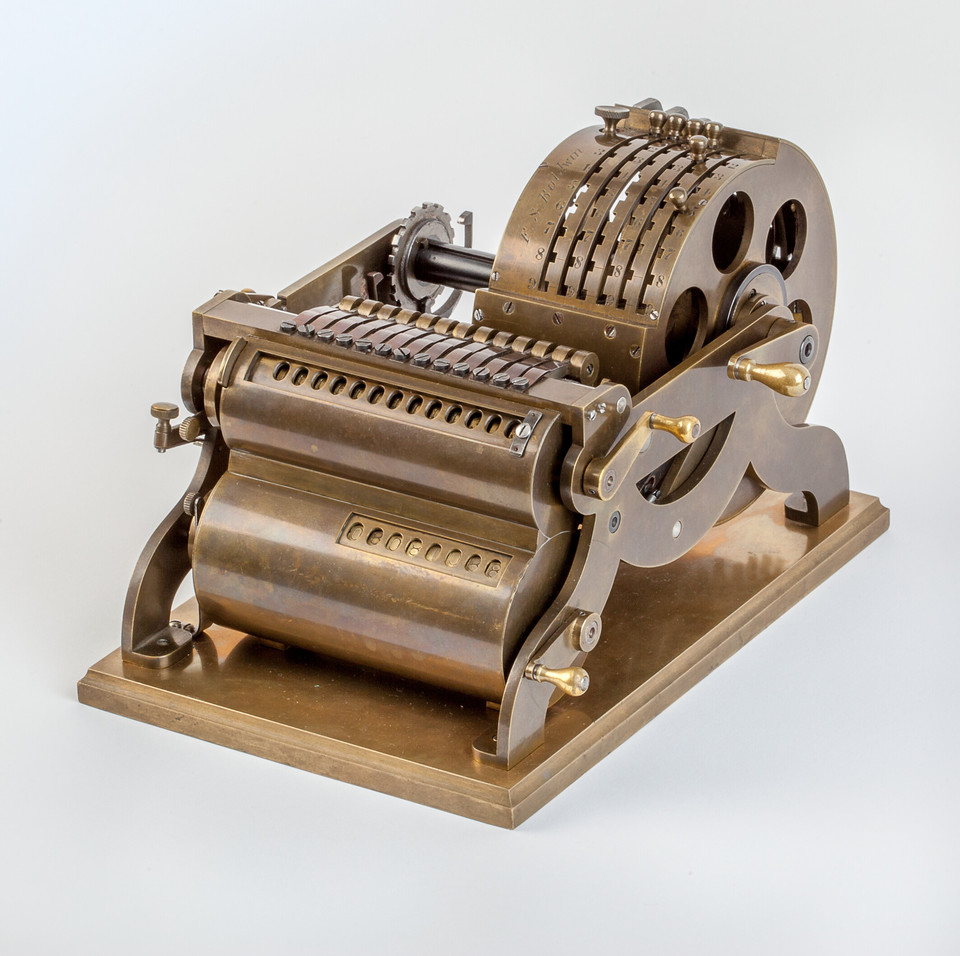
Frank Stephen Baldwin (1838-1925), an American inventor, began developing a mechanical calculating machine in 1870. In 1875 he patented a machine of which we own this replica. This is a reinvention of the pinwheel principle, which from that time onwards became a major competitor to the stepped drum principle. The advantages of the pinwheel principle compared to the stepped drum principle are the more compact shape of the gear shift mechanism and the reversal of the direction of rotation of the crank at the transition from addition/multiplication to subtraction/division (the machine is "helical"). Both allowed a smaller and thus cheaper version of a four-species computing machine. Three years later, the Swede Wilgodt Theophil Odhner also designed a machine based on the sprocket wheel principle, which he patented in Europe and the USA. In contrast to the Baldwin design, the Odhner design became decisive for the construction of pinwheel machines worldwide. However, Baldwin created the basis for the American production of four-species calculating machines (manufactured by Monroe) with his much later invention of the split stepped drum.
- Inventory number:
- FDM9116
- Inventor:
- Baldwin, Frank Stephen
- Year of invention:
- 1875
- Main category:
- Vierspeziesmaschine
- Subcategories:
- Sprossenrad
- Capacity:
- 6 (EW) x 8 (UZW) x 13 (RW)
- Dimensions (H x B x T):
- 14 x 17 x 22 cm
- Weight:
- 4,5 kg
- Literature:
- Chase, G. C.: History of Mechanical Computing Machinery. Pittsburg 1952 (ergänzter Nachdruck: Annals of the History of Computing, 2, 1980, p. 198-226)
- Turck, J. A. V. [1921]: Origin of Modern Calculating Machines. A Chronicle of the Evolution of the Principles that form the Generic Make-up of the Modern Calculating Machine. Chicago 1921, p. 82ff.
- Patents:
- US 159244 (Frank Baldwin: Improvement in Calculating-Machine)