






Napier'sche Stäbe
Rechenstäbe für die Multiplikation
ca. 1700
Napier Bones: reckoning rod for multiplications
around 1700
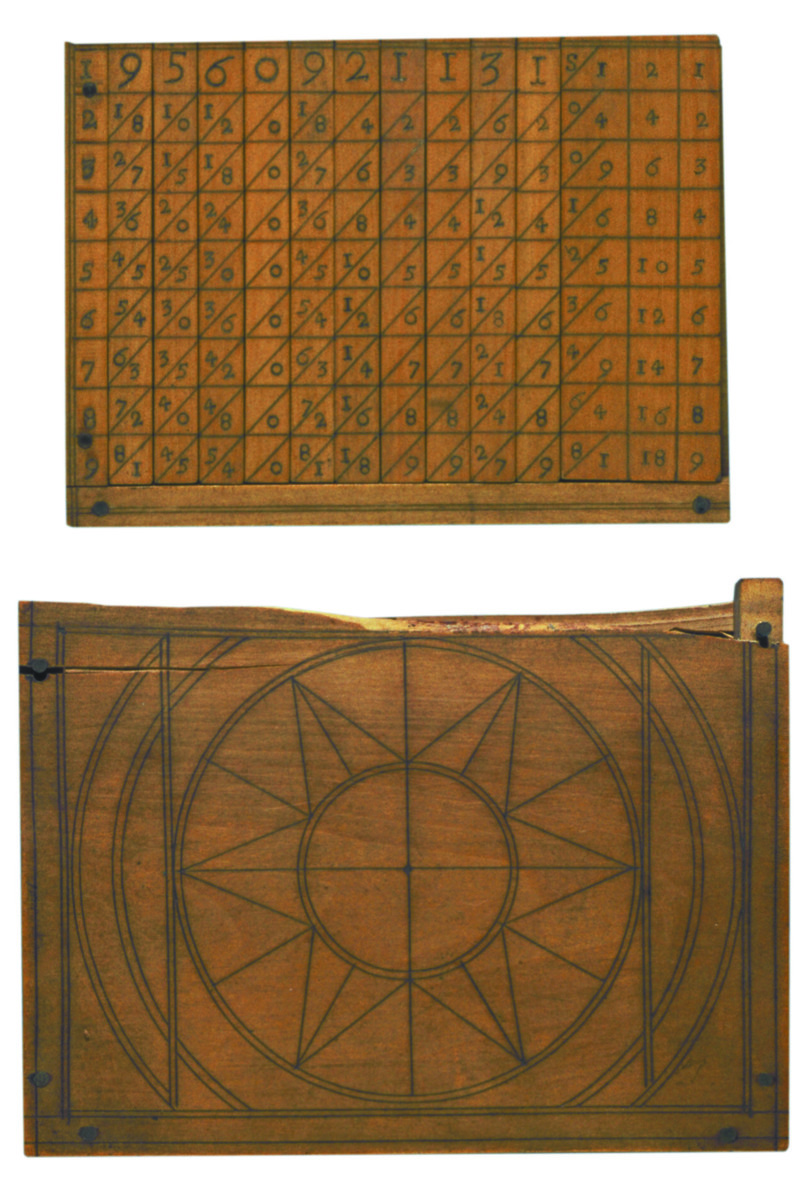
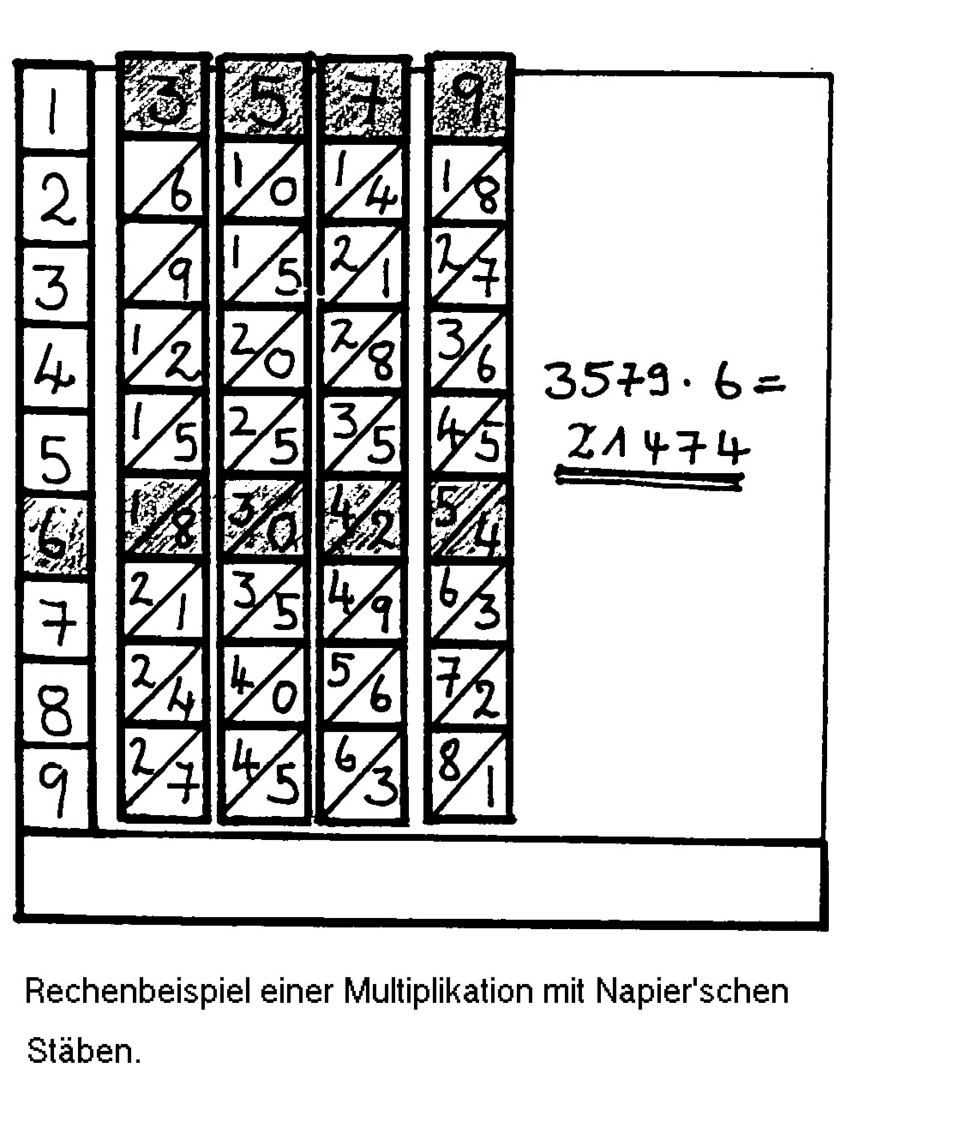
This model of the Napier Bones is from the 18th century and belonged to Earl of Stanhope in Chevening, Kent. This set was likely used by the 3rd Earl, Charles Stanhope (1753-1816). As Viscount Mahone, he developed several four-species and one two-species reckoning machine (see Inv.-nr. FDM 9395) between 1774 and 1780. Der rods, the small placement-table and the casket with minor damage are made from boxwood. The set contains ten rods and one three-parted block for reckoning with fractions or roots. The casket is, much like similar ones (for example in the British Museum in London or the Whipple Museum in Cambridge), decorated with a linear, geometric ornament ( a six-pointed star, which is edged by several rings). For reckoning with the Napier Bones see Inv.-nr. FDM 8942.
- Inventory number:
- FDM6095
- Inventor:
- Napier Lord of Merchiston, John
- Year of invention:
- 1617
- Year of manufacture:
- ca. 1700
- Main category:
- Einfaches Rechenhilfsmittel
- Subcategories:
- Napierstäbe
- Dimensions (H x B x T):
- 1 x 8 x 6 cm
- Weight:
- 33 grams
- Literature:
- Bryden, David J.: Napier´s Bones, A History and Instruction Manual. London 1992
- Weiss, Stephan: Die Rechenstäbe von Neper, ihre Varianten und Nachfolger. Ein Beitrag zur Geschichte des instrumentalen Rechnens. Ergolding 1985
- Williams, Michael R.: A History of Computing Technology. Prentice Hall 1985, p. 88-98