






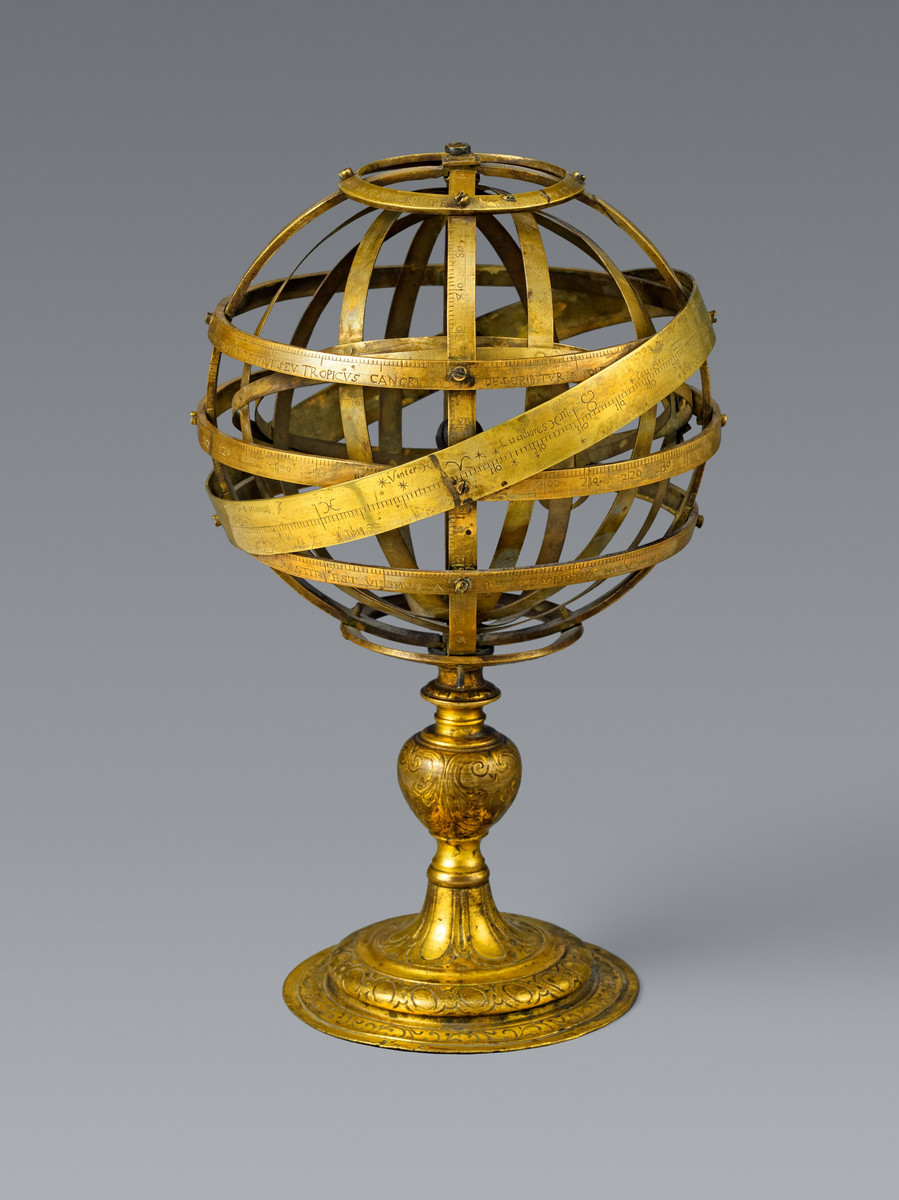
In the late Renaissance, a cabinet of curiosities was a place where the knowledge of the age and the wonders of the world were gathered in tangible form. Princes and scholars invited guests to marvel and learn. They gathered man-made objects as 'Artificialia' and natural specimens as 'Naturalia', which they displayed densely packed and in a confined space to reflect the abundance of the world and the universe. The cabinets of curiosities served as both repositories of research with scientific instruments, known as 'Scientificia', and venues for the display of knowledge and power. Whilst the 'Naturalia'-in the form of corals and shells, for instance-together with the 'Exotica' such as stuffed alligators or narwhal tusks, were intended to evoke wonder through particularly curious ideas, or to highlight the owner's long journeys and intercultural connections, the 'Artificialia' and 'Scientificia' encompass artistic and scientific artefacts of all kinds.
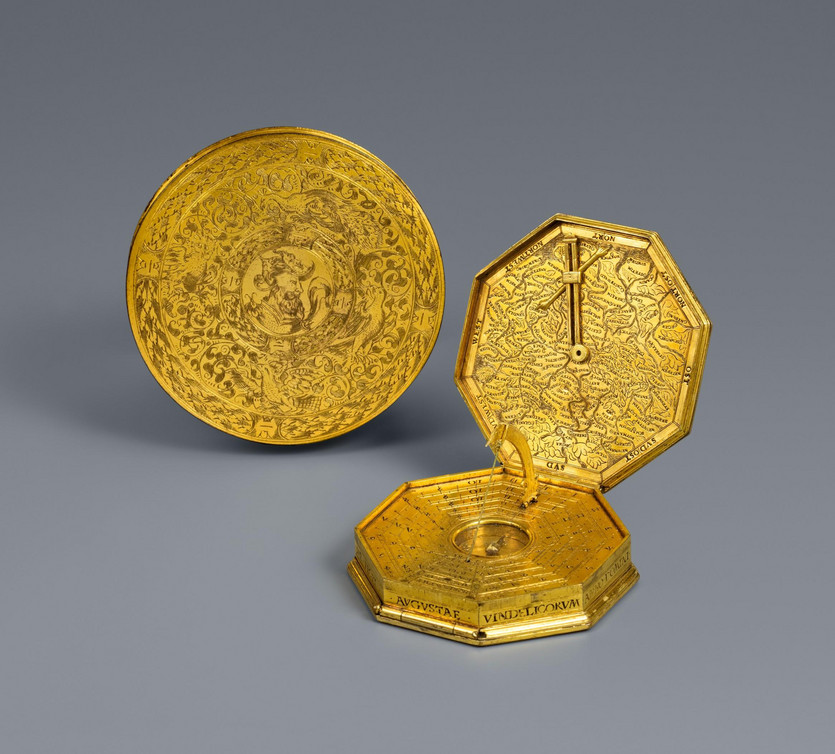
© Mathematical Compendium, Christoph Schissler, Augsburg 1557 gilded brass, Pohl-Goldschmidt Collection.
Historical cabinets of curiosities in general have been thoroughly catalogued and documented, such as one of the oldest collections at Ambras Castle, or the Habsburg cabinet of curiosities, which can now be admired at the Kunsthistorisches Museum in Vienna.
The Pohl-Goldschmidt Cabinet of Curiosities takes a different approach. For several generations, this privately owned collection has brought together objects of the highest artistic and material quality, originally crafted for display in a cabinet of curiosities. These are primarily scientific and mathematical objects from the Renaissance period, masterfully created by the most renowned makers of such cabinet pieces. The aim of the Pohl-Goldschmidt Collection is not, as is usually the case, to present an object from every genre and to recreate a cabinet of curiosities, but rather to document the production of cabinet pieces and to compare different versions of specific types of objects.
The Pohl-Goldschmidt Collection is therefore a rich source for the study of the cabinet of curiosities object as such, enabling us to trace the developments of individual makers and their competitors. The objects of scientific cabinets of curiosities were always artistic and magnificent luxury items, but they also bore witness to the state of scientific knowledge of the time. It is this combination that makes them unique and fascinating, even from today’s perspective. The makers – often scientists, engineers or mathematicians themselves – sought not only to reproduce what was already known, but also to create something unprecedented and to gain a better understanding of the world and the universe by combining or utilising new scientific achievements.
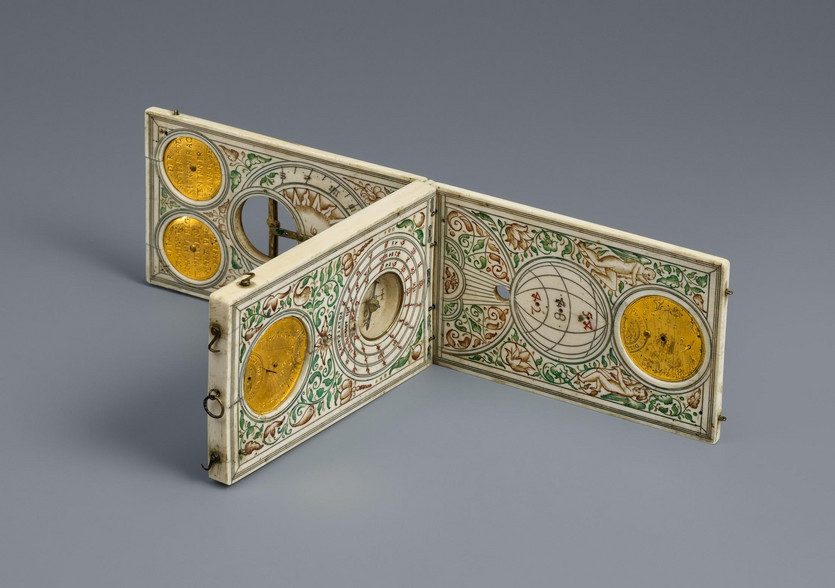
© Folding sundial (3 panels), Thomas Tucher, Nuremberg, c. 1620, coloured ivory, gilded brass, iron, glass, Pohl-Goldschmidt Collection.
A catalogue will be published to accompany the exhibition.
Public guided tour: Sundays at 4:30 p.m.
You can watch a video about cabinets of curiosities and the wonders on display here: