






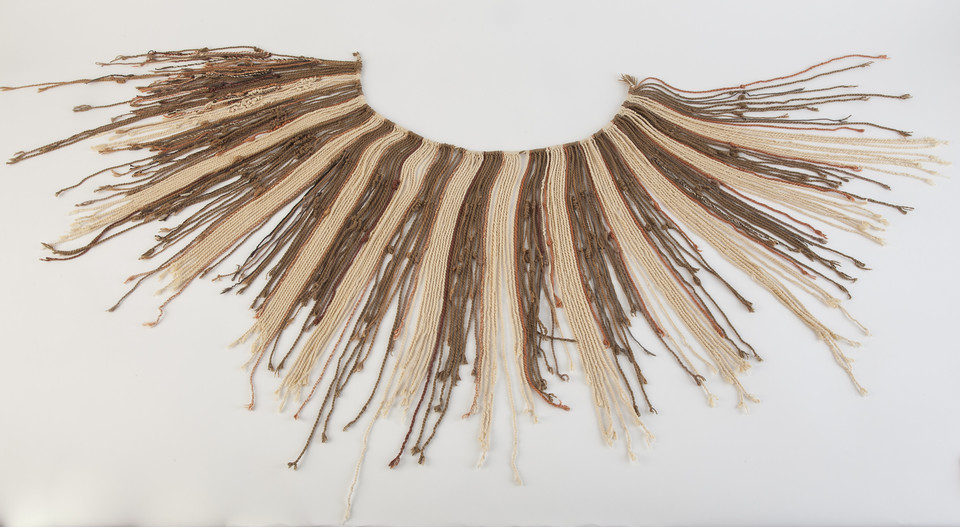
Quipu (Replica)
Knotenschnüre zur Datenspeicherung
ca. 1500
Quipu (Replica)
Knotted cords for data storage
approx. 1500
Quipus served the Incas as a number memory and thus as an important tool for the administration of their empire. The capital Cuzco was founded in the Peruvian highlands in the 13th century. At the time of the destruction of the empire in 1533 by the Spanish conquerors (Francisco Pizarro), it stretched over 5,000 km along the Pacific coast from Quito in the north to Santiago in the south.
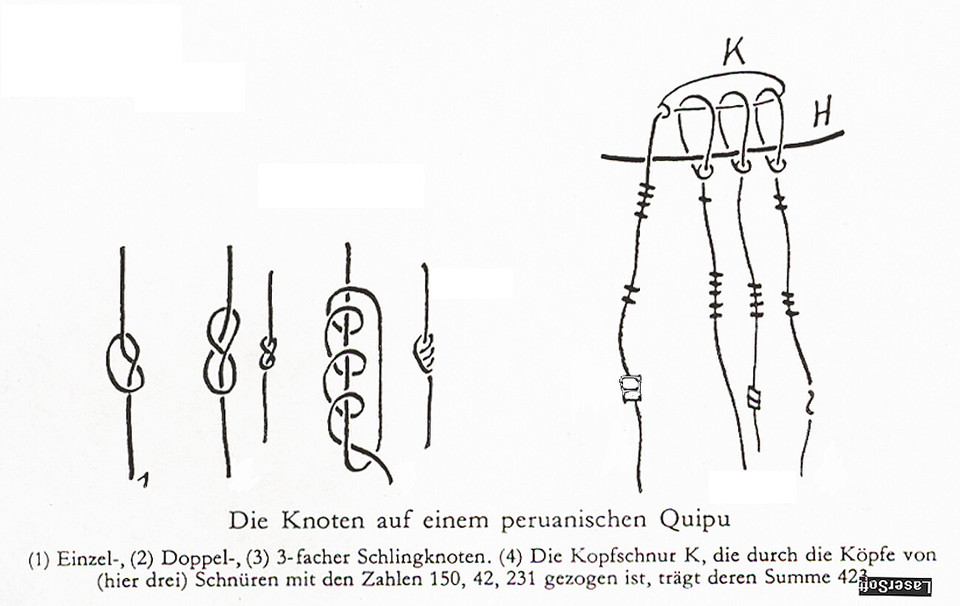
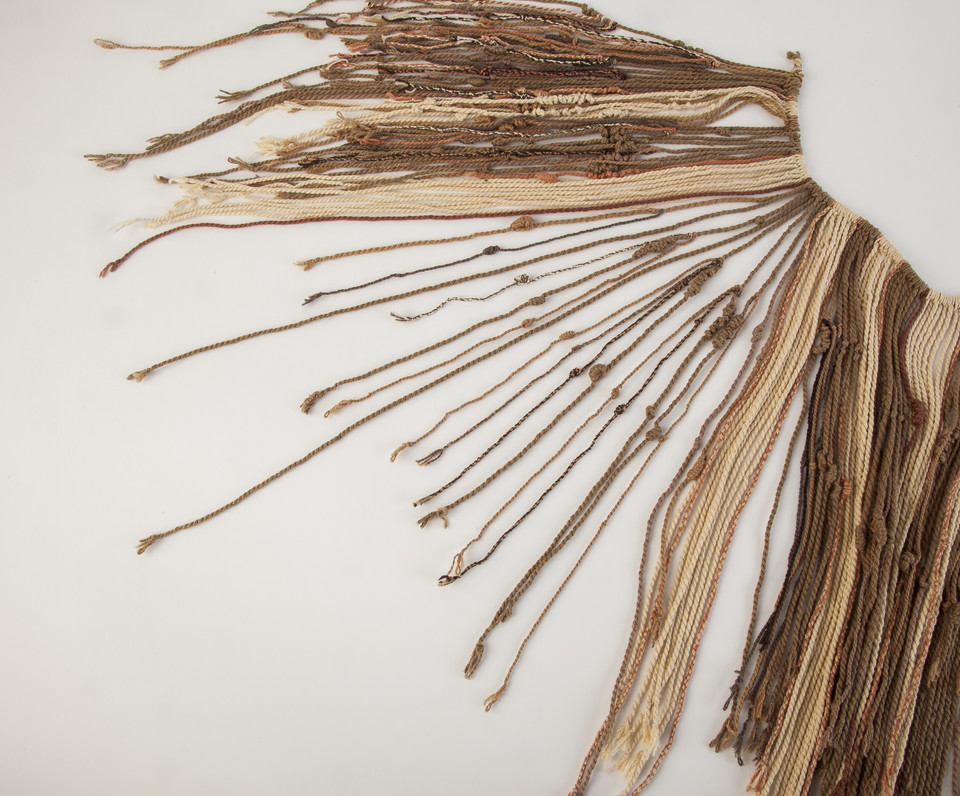
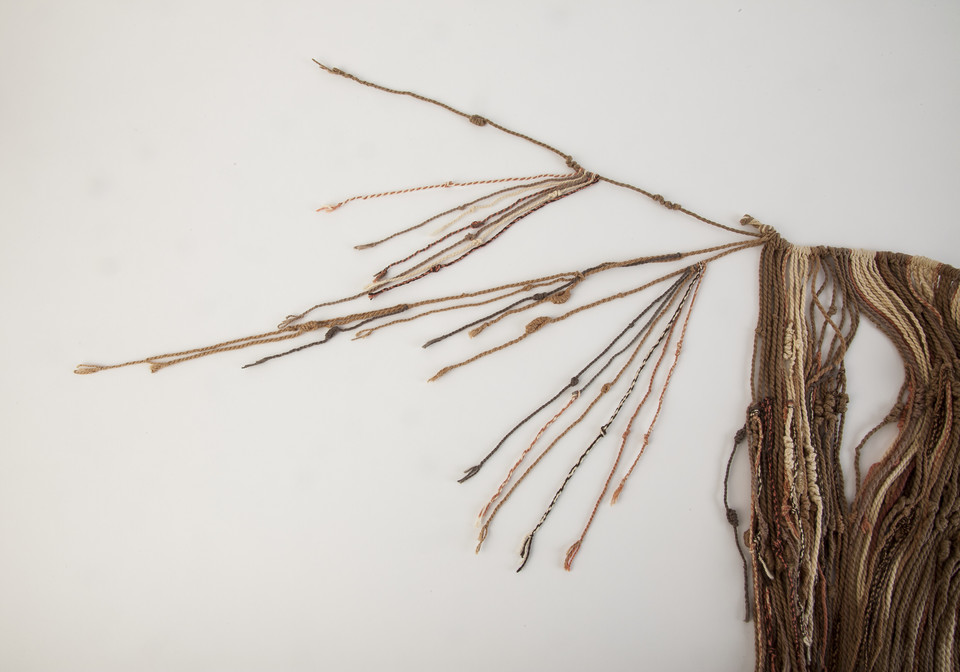
Quipus served as a means to secure and transmit statistical data and messages. In this process, differently coloured strings with tied knots were arranged in groups on a main string. State officials were responsible for knotting and reading the messages, thus also keeping a kind of statistics of the population and (agricultural) production and transmitting them to the central government. The civil service was very mobile at that time, as the long mountainous distances all had to be covered on foot. So it was important that the quipus made of woollen strings were very light.
This replica of a Quipu of the National Museum of Prussian Cultural Heritage Berlin (Inv-Nr. VA 63043) was produced in Cologne in 1997.
- Inventory number:
- FDM6332
- Year of invention:
- ca. 1500
- Manufacturer:
- Inka
- Replica year of manufacture:
- 1997
- Main category:
- Einfaches Rechenhilfsmittel
- Subcategories:
- Quipu
- Dimensions (H x B):
- 51 x 55 cm
- Weight:
- 154 grams
- Literature:
- Ascher, Marcia/Ascher, Robert: Mathematics of the Incas, Code of the Quipu. Mineola, New York 1997
- Ifrah, G.: Universalgeschichte der Zahlen. Frankfurt 1986, p. 121-128