






Cram Adding Machine
Einzelreihen-Tastenaddiermaschine
1877
Cram Adding Machine
Single row keypad adding machine
1877
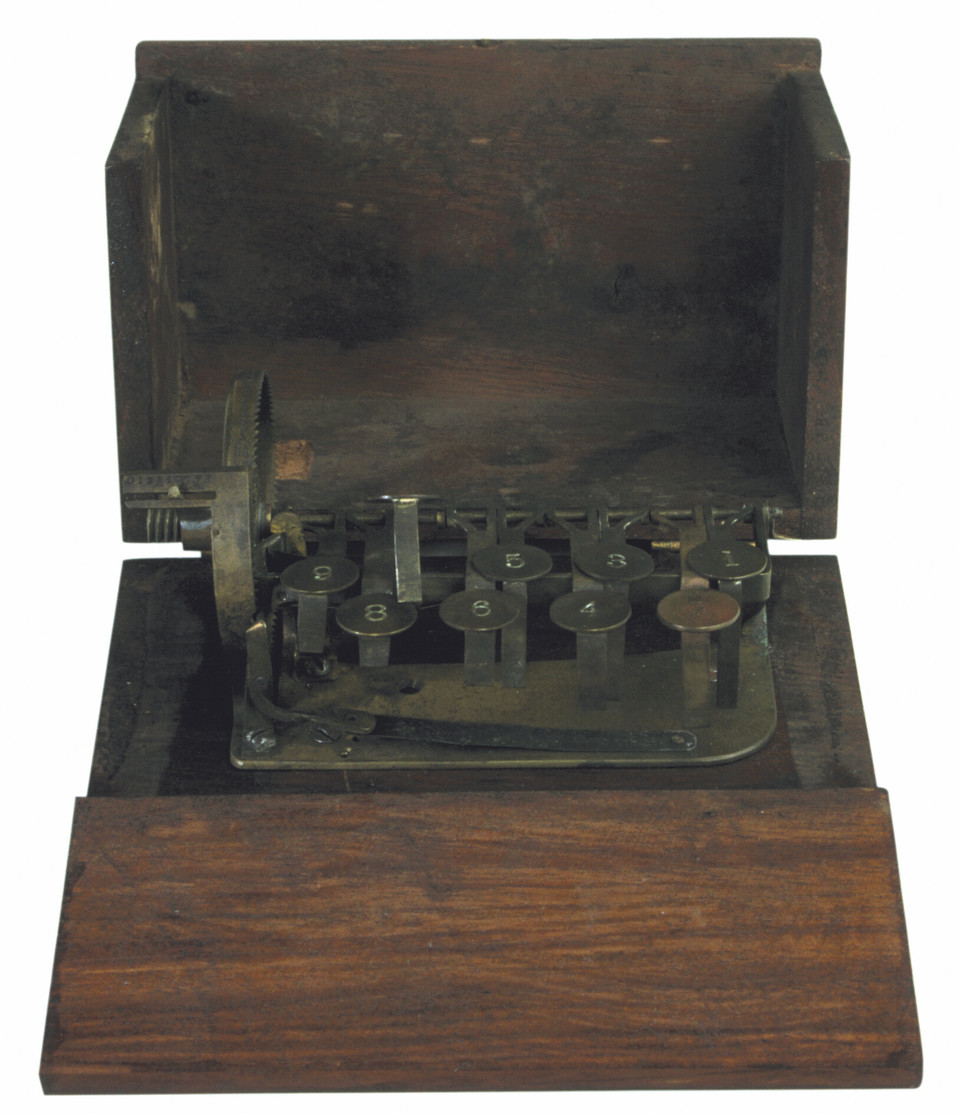
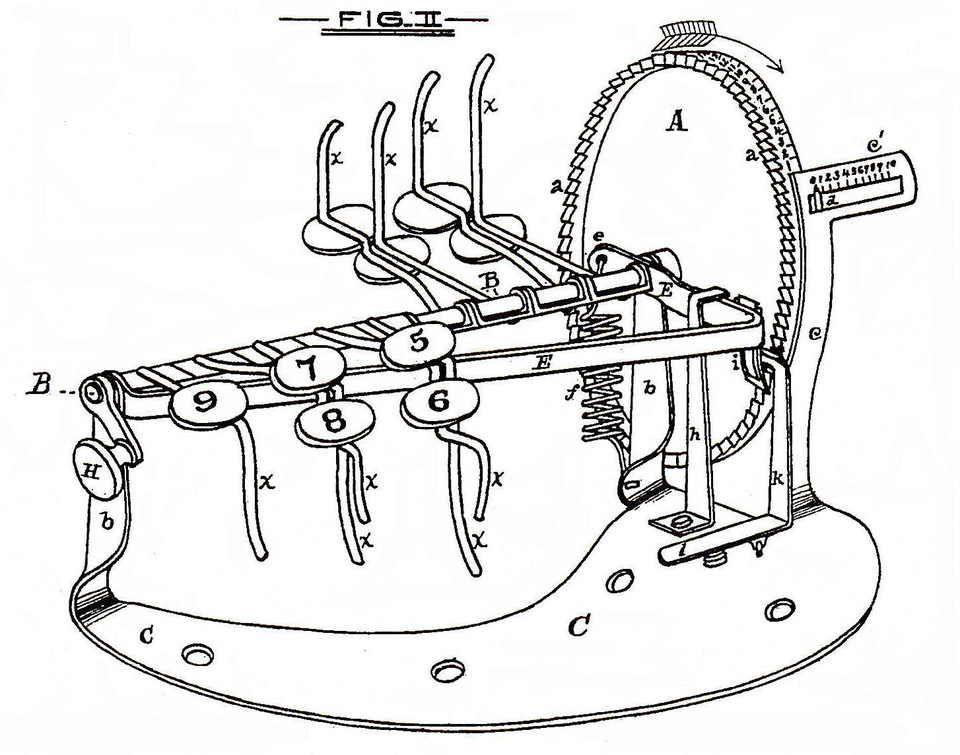
This machine is the only experimental model designed by Marshall M. Cram from Minnesota, USA, for which he received a US patent in 1877. The nine keys act on a metal bracket which, when pressed downwards by means of a movable ratchet, moves the counting wheel by a corresponding number of divisions. The deflection of the bracket is limited by stops on the keys corresponding to the digits. The counting wheel with one hundred divisions rotates on a thread, creating a slight horizontal movement. The number of complete revolutions is indicated as x of 100 with a pointer. The display capacity is 999. The machine should add up numbers that are one below the other, such as in account books, in places, i.e. first the units, then the tens, etc. The subtotals then had to be added up according to their significance. The experimental model is slightly different from the patent version: The summation mechanism is attached to the left (instead of the right) of the keyboard. The machine was not produced. Turk [1921] does not mention this experiment! The patent model remained in the possession of the inventor's descendants until 1996.
- Inventory number:
- FDM6298
- Inventor:
- Cram, Marshall M.
- Year of invention:
- 1877
- Year of manufacture:
- 1877
- Main category:
- Ein- bis Dreispeziesmaschine
- Capacity:
- 3 (EW) x 0 (UZW) x 3 (RW)
- Dimensions (H x B x T):
- 10 x 18 x 11 cm
- Weight:
- 650 grams
- Literature:
- Otnes, Bob: „Small Adders“, in: Schmidt, W. H./Girbardt, W. (Hrsg.): 2. Greifswalder Symposium zur Entwicklung der Rechentechnik. Greifswald 2003, p. 41-58
- Patents:
- US 193853 [1877] (Marshall Cram: Improvement in Adding-Machines)